

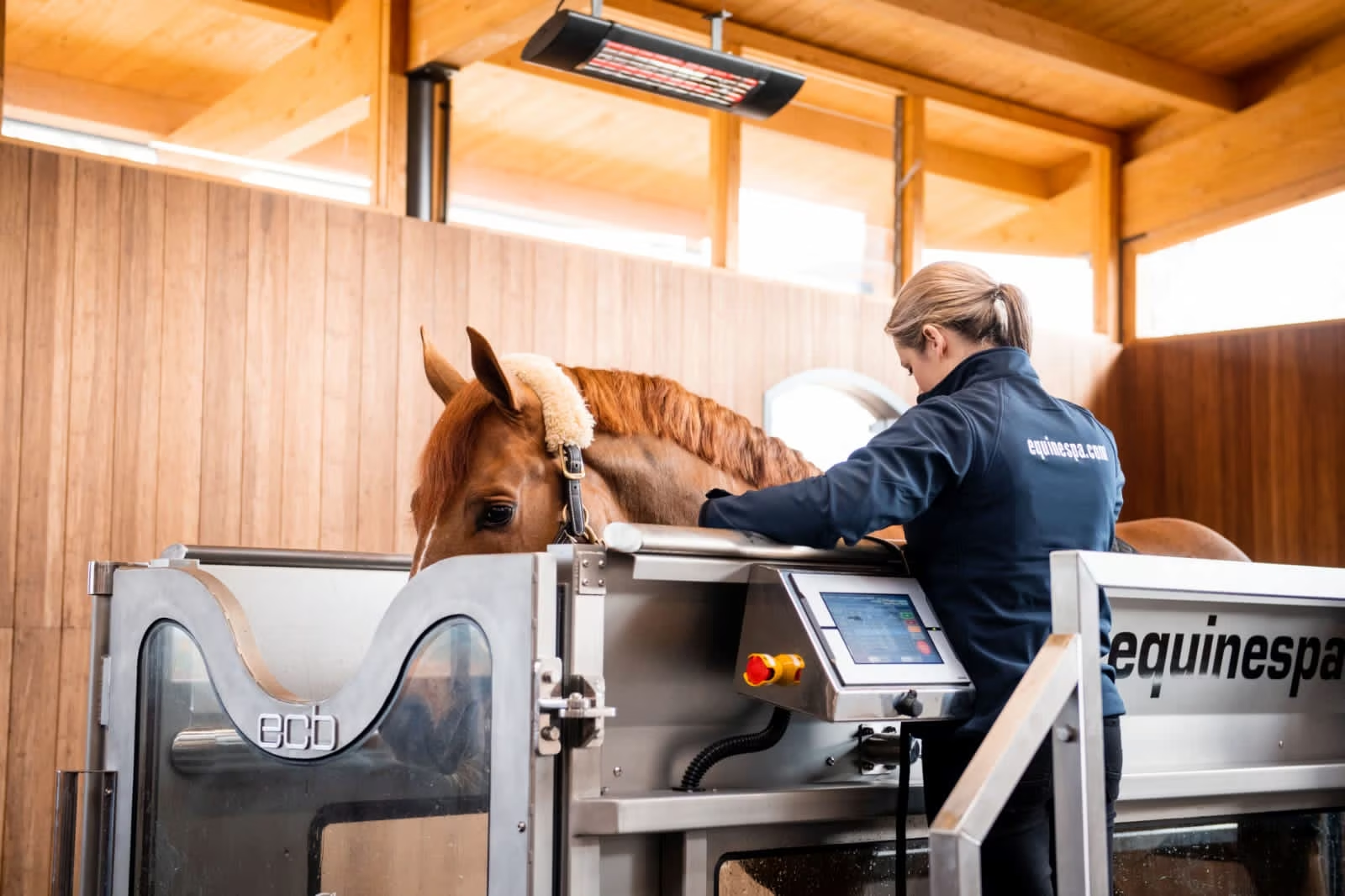
Water treadmills changed the way professional yards condition horses. They are the only piece of equipment that lets you build cardiovascular fitness, strengthen the topline, rehabilitate a soft-tissue lesion, and reduce concussion load on the limbs — all in the same session, with the same horse, in 25 minutes a day. But the equipment alone is not the program. What separates a yard that gets full value from its water treadmill from a yard that uses it as an expensive walker is one thing: a written, progressive, periodized training plan.
This guide is the 12-week structure we recommend to trainers and rehabilitation managers using the ECB Equine Aqua Treadmill for the first time. It is the same framework used in racing yards, sales-prep facilities, sport horse programs, and rehabilitation centers from Sharjah to Ireland to California. Adapt the parameters to your horse, your facility, and your discipline — but keep the structure.
The program runs in four three-week phases, each with a clear physiological target.
Every session, across every phase, follows the same five-step structure: dry warm-up, low-depth walk-in, working set, low-depth walk-out, dry cool-down. The treadmill itself is doing the conditioning work — the warm-up and cool-down protect the horse from cold shock and ensure clean recovery.
The first three weeks are not about conditioning. They are about teaching the horse how to work in water, finding the depth at which the gait stays clean, and giving the trainer baseline data to build the rest of the program on.
Session frequency. Three sessions per week, ideally on alternating days. Sessions are short: 10 to 12 minutes of in-water time, plus warm-up and cool-down. Build the horse's confidence — a horse that learns to relax in the treadmill in week one will give you better data and better results for the rest of the program.
Depth. Start at fetlock-deep. Each session, raise the depth by 5 to 8 cm only if the horse maintains a regular four-beat walk. The target is mid-cannon by the end of week one and mid-radius/tibia by the end of week three. Never raise depth on a session where the horse is breaking gait or pulling back.
Speed. Walk only. Walking speed should match a brisk in-hand walk — typically 4.5 to 5.5 km/h, but horse-dependent. The goal is a swinging, even, four-beat walk that uses the back. Watch the topline from behind: a horse that is using the treadmill correctly shows visible engagement through the lumbar region within the first 90 seconds.
What to measure. Working heart rate at end of session, recovery heart rate at 5 minutes post, depth tolerance, stride quality (notes only). Take a topline photo from behind on day 1 and again at the end of week 3. The visible change is your motivation to continue.
Now the horse is acclimated, the depth tolerance is established, and you can start building real fitness. The cardiovascular adaptation in this phase carries the rest of the program.
Session frequency. Four sessions per week. Avoid back-to-back days unless the horse's overall workload allows it.
Depth. Hold at the upper end of the horse's clean-gait range — usually mid-stifle. The buoyancy is doing the concussion-reduction work; the water resistance is doing the cardiovascular work. Going deeper without a specific reason adds resistance the horse cannot translate into useful conditioning.
Speed and intervals. Stay at walk, but vary the speed within sessions. A typical session looks like: 3 minutes at base walk speed, 1 minute at brisk walk, 3 minutes at base, 1 minute at brisk, 3 minutes at base. Total working time 11 minutes. Increase brisk-walk intervals by 30 seconds each week.
Hydrotherapy benefit. The water at this depth is delivering the same kind of hydrostatic compression and cold benefit that the ECB Equine Spa delivers as a standalone treatment. The horse is being conditioned and recovered at the same time. Yards that combine treadmill work with separate ECB Equine Spa sessions on non-treadmill days see the strongest cardiovascular adaptation through this phase.
What to measure. Working heart rate trend — it should drop week-on-week for the same workload. Recovery time should compress. Topline photo at week 6.
This is the phase where the treadmill delivers what no other piece of equipment can: simultaneous low-concussion cardiovascular load and progressive muscular strength training, particularly to the topline, the hindquarters, and the core stabilizers.
Session frequency. Four sessions per week.
Depth and incline. Hold the depth at mid-stifle. Introduce incline. Start at the lowest incline setting and add it for the middle third of the session only. Each week, expand the incline duration by 90 seconds and increase the incline by one step if the horse is maintaining gait quality.
Speed and gait. Introduce trot work in the second half of week 7 if the horse is sound and the gait at walk-incline is clean. Trot intervals are short and conservative: 30 to 45 seconds at a time, no more than two intervals per session in week 7, expanding to three intervals of 60 seconds each by the end of week 9.
What this phase produces. Visible epaxial muscle development. Independent research has shown that consistent inclined water treadmill work significantly increases the cross-sectional area of the equine thoracic back muscles — read our research summary on epaxial muscle profile development for the published study and the implications for dressage, jumping, and racing performance.
What to measure. Topline photo every two weeks. Stride length and impulsion on the track or under saddle should be visibly improved by week 9. Trainers often notice the change in the saddle before they notice it on the treadmill.
The final phase is the most important and the most commonly mishandled. The treadmill program is now a support tool for the ground or track work, not the primary stimulus. Used correctly, it tapers the horse into peak condition for competition or returns it to full sport-specific work. Used incorrectly, it overcooks the horse.
Session frequency. Reduce to three sessions per week. The fourth slot in the previous phase is now a rest day or a recovery-only session.
Volume. Reduce total in-water time by 25%. The fitness is already there — the goal is to maintain it without adding fatigue load on a horse who is now in full ridden work or back on the track.
Depth and incline. Pull the depth back to mid-cannon for two of the three weekly sessions. The intensity is no longer the priority; the recovery benefit of the water environment is. Keep one weekly session at mid-stifle depth with incline to maintain the topline gains.
Trot intervals. Maintain at the week 9 level. Do not expand. The treadmill is no longer the limiting fitness stimulus.
The 96-hour rule. No treadmill session within 96 hours of a competition. The horse needs to be fresh.
The structure above is the framework. Real horses need real adaptations.
The yards that struggle to see results from their treadmill almost always make one of these errors.
1. Going too deep too fast. A horse working at a depth where the gait breaks is not getting conditioning benefit — it is being trained to move incorrectly. Keep depth at the level where the four-beat walk stays clean. Resistance comes from speed and incline, not from drowning the horse.
2. Skipping the warm-up. A cold horse walking straight into cold water is a horse at risk of soft-tissue injury. Five minutes of in-hand walking before every session. Non-negotiable.
3. Treating the treadmill as a replacement for the ridden program. The treadmill builds fitness and topline. It does not build sport-specific skills, ridden communication, or competition mindset. Use it as a supplement, not a substitute.
4. No measurement. If you are not recording working heart rate, recovery heart rate, depth, speed, and incline at every session, you cannot run a periodized program. Use the ECB session log or your own template.
5. Continuing the program when the horse tells you to stop. Refusal to enter the unit, broken gait at previously tolerated depths, hot legs after sessions that were previously clean — all are signals. Reduce intensity or rest. The treadmill is a tool, not a target. For depth, sizing and running costs in one place, read Equine Underwater Treadmills Explained.
Visible topline change by week 6 in most horses. Measurable cardiovascular adaptation by week 4 (heart rate trends will tell you before the eye does). Improved stride quality under saddle by week 8 to 9. Significant improvements in performance metrics — collection in dressage, scope in jumping, sectional times in racing — typically present by the end of week 12.
Yes — that is one of its strongest applications. For soft-tissue rehabilitation, the program looks different: longer phase 1, slower depth progression, no incline until veterinary clearance, no trot work in most cases. Build the rehab program with your treating veterinarian. The ECB team can share template protocols for the most common rehabilitation cases — suspensory desmitis, SDFT tendinopathy, post-arthroscopic recovery.
A standard ECB Aqua Treadmill in a well-run facility comfortably handles 12 to 16 sessions per day across an 8-hour operating window, including filling, draining, and transition time. High-throughput racing yards push that to 20+ with multi-handler teams. See our buyer's guide on equine aqua treadmill cost for facility-design considerations.
No working session. A short, shallow, walk-only session at low intensity 24 to 48 hours before competition can support recovery from final preparation work, but the treadmill is not a competition-day warm-up tool. Allow 96 hours between any meaningful treadmill session and competition.
Yes, with modifications. Expand phase 2 to 5 to 6 weeks for the cardiovascular base, hold depth at mid-stifle longer, and use the program as a supplement to roadwork rather than a replacement. Endurance horses get particular benefit from the hydrostatic compression aspect during long competition seasons.
For conditioning, cool to ambient — not the chilled-saltwater temperatures of the ECB Equine Spa. The treadmill is a working environment, not a recovery environment. Excessively cold water during a working session reduces gait quality and undermines the conditioning effect.
Whether you are planning your first water treadmill installation or refining a program that has been running for years, the ECB team is ready to help you build the protocol that fits your discipline, your horses, and your facility. The Aqua Treadmill has been running in over 500 facilities worldwide for the better part of two decades — there is very little we have not seen.
Explore the full ECB water treadmill for horses page for specifications, or read about how rehabilitation centers structure their treadmill operations on our Solutions for Rehabilitation Centers page. To talk to the team about a program for your yard, request a consultation through our contact page — or call +1 973-383-5511 (Americas) or +44 (0)1451 822969 (UK and rest of world).