

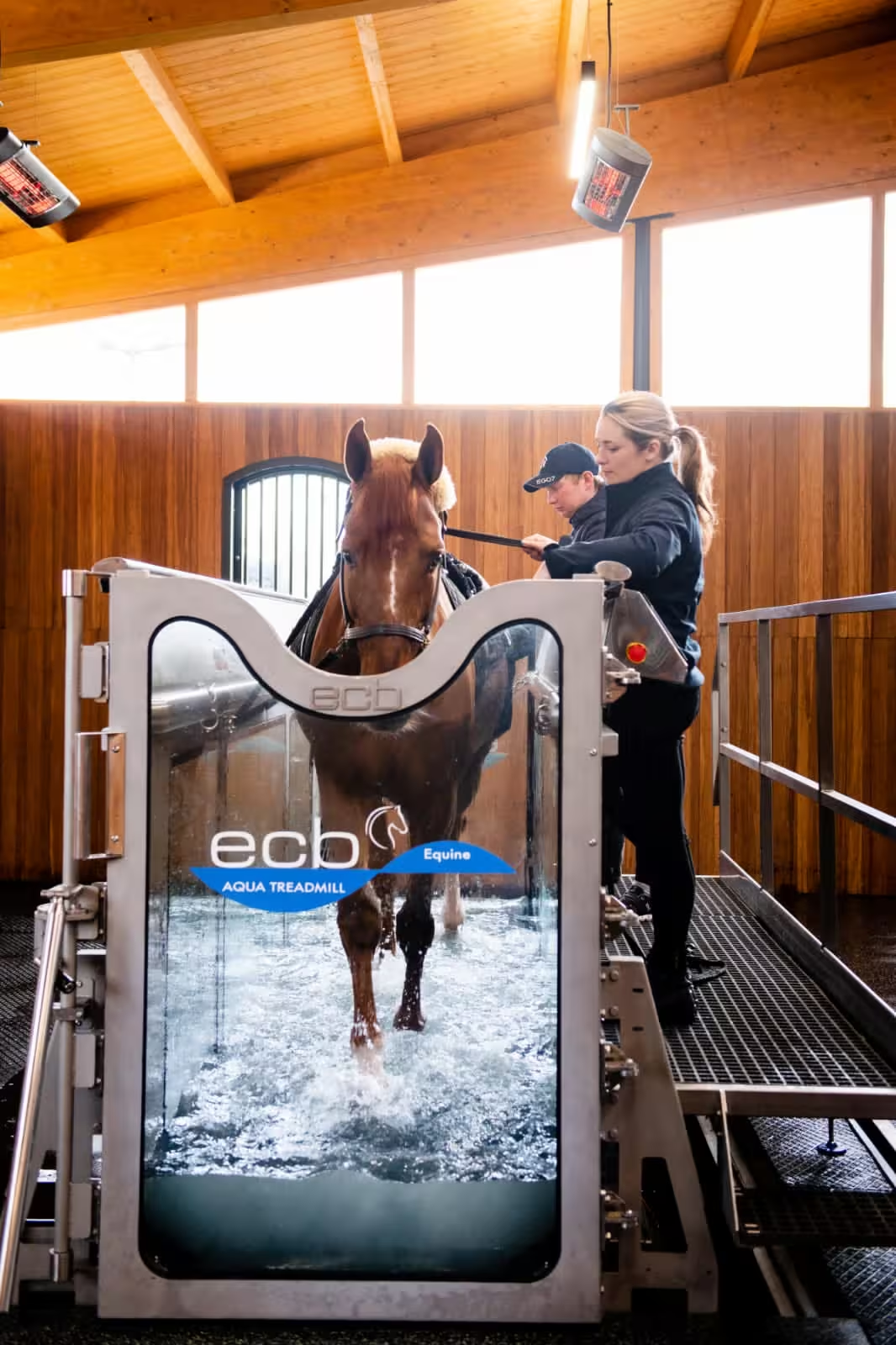
A water treadmill and a high-speed treadmill solve different problems. A water treadmill uses buoyancy and drag for low-concussion rehab and conditioning at walk and trot. A high-speed treadmill builds speed and cardiovascular fitness at faster paces, with the limbs carrying full load. ECB Equine supplies both, so the right choice depends on your caseload.
There are two main types of horse treadmill: the water treadmill and the dry high-speed treadmill. Both exercise a horse on a moving belt in a fixed position, but they are built for different goals and different horses.
A water treadmill (also called an aqua treadmill or underwater treadmill) runs inside a sealed chamber that fills with water to a set depth. The horse walks or trots while the water supports part of its weight and resists every stride. It is mainly a rehab and conditioning tool.
A high-speed treadmill is a dry machine. It runs much faster, adds incline for extra work, and is used to build speed, endurance and cardiovascular fitness in athletic horses. It is mainly a training tool, although it can support the later stages of a return to work.
A water treadmill lets you control how much load the limbs carry while the muscles keep working. The deeper the water, the more buoyancy supports the horse and the more drag it has to push against.
Shallow water at fetlock depth gives near-normal loading with mild resistance and encourages the horse to lift its feet. Water at knee and hock depth increases joint flexion and begins to unload the limb. Deeper water at forearm and stifle depth gives more support and more resistance against the body. Once the water rises past roughly the elbow and stifle, the horse starts to float and gait control is lost, so good operators work below that line.
On the ECB equine water treadmill, the operator sets each variable for every session:
Individual sessions are stored per horse on the touchscreen, so each one can be repeated exactly, whoever is on shift. Large safety glass panels let a vet or therapist watch limb placement under water. The self-cleaning filtration system uses ozone, chlorine and a clarifier with automatic dosing, and it keeps around 6,000 litres of water in use for over six weeks instead of daily or weekly changes.
Typical uses include controlled loading after tendon and ligament injury, return to work after surgery, rebuilding topline after box rest, straightness work and low-concussion conditioning for sound horses.
A high-speed treadmill trains speed, endurance and cardiovascular fitness under controlled, repeatable conditions. It replaces some of the variability of open-track work with exact settings for speed, incline and duration.
ECB Equine is the official UK agent for the GG Engineering high-speed treadmill. Its main specifications are:
The machine has been refined over more than 15 years. Because it runs dry, the limbs carry full body weight, even on the cushioned bed. That makes it a fitness and speed tool first. Trainers use it to build cardiovascular strength, standardise work across a string and keep horses training whatever the weather or track conditions.
You can read the full specification on the high-speed horse treadmill page.
Choose a water treadmill when the goal is controlled loading, rehab or low-concussion conditioning. Choose a high-speed treadmill when the goal is speed, gallop fitness and repeatable fast work.
A simple way to decide is to ask what limits your horses today.
| Factor | Water treadmill (ECB Equine Aqua Treadmill) | High-speed treadmill (GG Engineering) |
|---|---|---|
| Main goal | Rehab, controlled loading, topline and low-concussion conditioning | Speed, endurance and cardiovascular fitness |
| Impact on limbs | Reduced by buoyancy; load set by water depth | Full body weight on the limbs, softened by a cushioned running bed |
| Speed range | Up to 12 km/h (7.5 mph), walk and trot | Up to 45 km/h (28 mph) |
| المنحدر | 0 to 12% in 1% steps | Up to 6 degrees |
| Space and installation | Built-in pit (4,956 x 2,170 x 1,608 mm) or floor-mounted unit (6,932 x 2,610 x 2,008 mm); water supply and drainage needed | Concrete base prepared by the facility; delivered, installed and commissioned by GG Engineering |
| Power | Single-phase or three-phase supply | 32 A 3-phase, 50 A 2-phase or a 40 kVA generator |
| Typical buyer | Vet clinics, rehab facilities, performance stables and training facilities | Racing yards and performance training operations |
A water treadmill needs a plumbed, drained bay and either a pit or a strong, level floor. A high-speed treadmill needs a concrete base, a heavy-duty power supply and unloading equipment on delivery day.
The ECB aqua treadmill comes in two formats that share the same drive, controls and filtration. The built-in model sits in a pit measuring 4,956 mm long, 2,170 mm wide and 1,608 mm deep (16 ft 3 in x 7 ft 1 in x 5 ft 3 in), so horses walk in at floor level. Plan a bay of roughly 20 ft by 12 ft with 12 ft of clear headroom. The floor-mounted model measures 6,932 mm long, 2,610 mm wide and 2,008 mm high. It needs no excavation, which suits existing barns and leased buildings, but it takes more floor space and needs a ramp.
Both formats need a single-phase or three-phase electrical supply, a mains water connection and drainage. The treadmill weighs about 2,200 kg before water, so the floor and the access route need checking. Site preparation (pit, slab, drainage, water and a dedicated circuit) is a meaningful share of most projects and is the line most often missing from a first quote.
The GG high-speed treadmill needs one of three power options: 32 A 3-phase, 50 A 2-phase or a 40 kVA generator. The facility provides the power supply, prepares a concrete base and arranges unloading equipment. GG Engineering delivers, installs and commissions the machine, and ECB Equine provides ongoing support. A 1-year warranty covers the whole machine. Footprint and base dimensions are confirmed on your quote.
ECB does not publish list prices for either machine, because the figure depends on configuration, site and country. The useful approach is to understand what drives cost and then model payback for your own caseload.
ECB quotes each project individually rather than publishing a list price, so the figure you receive reflects your configuration and site.
Payback depends on use, not on the headline specification. Facilities usually build a simple model with five inputs:
Multiply sessions, value and operating days to get annual value. Subtract annual running costs. Divide the installed cost by the result to get an indicative payback period. Then test the model at lower usage, because few new installs run at full capacity in the first months. For a deeper breakdown of water treadmill costs, read our equine aqua treadmill cost guide.
Yes, and the two machines complement each other. A water treadmill covers the early and middle stages of rehab and adds low-impact conditioning, while a high-speed treadmill covers the final stage of fitness and speed work.
In practice, a horse coming back from a soft-tissue injury might spend its controlled-loading phase in the water treadmill, then move to the high-speed treadmill and the track once its vet clears it for full load. A racing or performance yard might use the high-speed treadmill for fast work and the water treadmill on easier days for topline and low-concussion volume. Some facilities add a cold salt water spa or localised cryotherapy for recovery after work. ECB supplies all of these, and you can see the full range on our equine hydrotherapy products page.
Before you buy any horse treadmill, new or used, ask questions that reveal the full installed cost and the support behind it.
To talk through your space, power supply and the number of horses you plan to work each day, request a consultation with the ECB team.
ECB Equine designs and manufactures equine hydrotherapy equipment, including cold salt water equine spas, the ECB Equine Aqua Treadmill, mobile equine spas and INSTANTCRYO localised cryotherapy. It is also the official UK agent for the GG Engineering high-speed horse treadmill. ECB has supplied equine facilities for more than 25 years and has more than 500 installations worldwide, with offices in Sparta, New Jersey, and Bourton-on-the-Water, Gloucestershire, UK.
A water treadmill uses water depth to reduce limb load and add resistance, at walk and trot up to 12 km/h. A high-speed treadmill runs dry at up to 45 km/h with up to 6 degrees of incline, so it trains speed and fitness with the limbs carrying full load.
It can support the later stages, once a horse is cleared for full load, because speed and incline are controlled and repeatable. For early controlled loading, a water treadmill is the better tool because water depth reduces the load on the limbs.
The ECB Equine Aqua Treadmill runs at up to 12 km/h (7.5 mph), which covers walk and trot. Incline adjusts from 0 to 12% and water depth goes up to 104 cm (41 in).
The GG high-speed treadmill needs one of the following: 32 A 3-phase power, 50 A 2-phase power or a 40 kVA generator.
Not always. The built-in model sits in a pit so horses walk in at floor level. The floor-mounted model needs no excavation but takes more floor space and needs a ramp.
ECB quotes each project individually because cost depends on configuration, site work and country. ECB does not publish a list price. A consultation gives you a figure for your own site.