

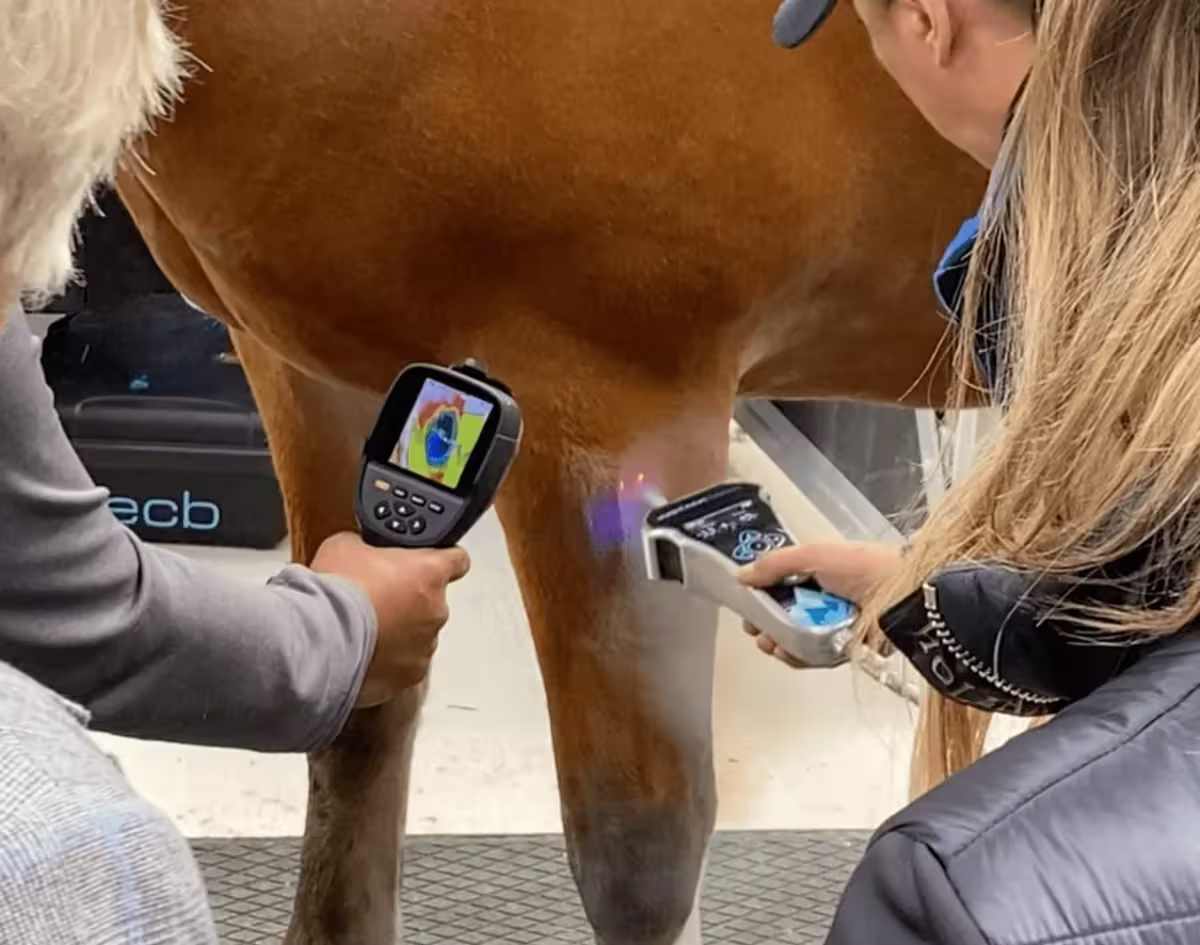
Cold has been part of equine first aid for as long as horses have been in work. A bucket of ice, a running hose and a pair of cooling boots are fixtures of most yards. Today, cryotherapy for horses ranges from those simple methods to chilled salt water spas and handheld devices that deliver carbon dioxide at extremely low temperatures to a single target area.
This guide explains what cold does to tissue, how the main cooling methods compare, which injuries respond, how sessions are structured, what drives equipment cost and how FEI rules apply. It is written for trainers, vets and rehabilitation yard managers who want a practical picture before they invest.
Equine cryotherapy works through a few well understood physiological responses. The cooling method changes how quickly they happen, but the principles are the same.
When tissue is cooled, the blood vessels in the area narrow. This vasoconstriction reduces blood flow into the injured region, which in the acute phase helps limit bleeding within the tissue and the build up of inflammatory fluid.
Cold reduces tissue temperature and with it the metabolic rate of the cells. Cells that are working more slowly need less oxygen, which is one of the reasons cold is used early after an injury, when the surrounding tissue is under stress.
Cooling slows the speed at which nerves conduct signals. In practical terms this produces an analgesic effect: the horse feels less pain in the treated area. That can make a sore horse more comfortable and easier to manage during rehabilitation.
By combining reduced blood flow with a slower cellular response, cold helps limit swelling in the acute phase of an injury.
Localised CO2 cryotherapy adds a further effect. The very rapid drop in skin surface temperature triggers strong vasoconstriction, which is followed by increased circulation to the area once treatment stops. This rebound, known as reactive hyperaemia, brings fresh blood flow to the treated tissue.
Most yards use one or more of three approaches. For a deeper comparison of the two professional options, see our guide to cold saltwater hydrotherapy vs cryotherapy for horses.
Cold hosing uses ordinary tap water run over the leg, usually for 10 to 20 minutes. Ice boots and wraps hold ice or a frozen gel pack against a region of the limb.
In a cold salt water spa, such as the ECB Equine Spa, the horse stands in a closed tank of high salinity water chilled to approximately 2°C (35°F). The salt concentration is roughly ten times that of seawater, and all four lower limbs are treated at once for 10 to 20 minutes.
Localised cryotherapy uses a handheld device to deliver food grade liquid CO2 at -78°C (-108°F) under high pressure to a precise area. The skin surface temperature of the treated area drops to approximately 4°C (39°F) within 30 seconds.
Before any cold therapy, the injury should be examined and diagnosed by a vet. Cryotherapy supports treatment and recovery; it does not replace diagnosis or the treatment plan your vet sets.
Localised cryotherapy is used in practice for a wide range of musculoskeletal and soft tissue problems, including:
It is also used before and after training or competition to address muscle tension. For a real world example, read our case study on treating saddle sores with localised cryotherapy, which followed one horse over six weeks.
In the acute phase, straight after an injury, the aim is to control inflammation, swelling and pain.
In chronic or long running conditions, such as arthritis or old tendon injuries, cold is used more for comfort and to manage flare ups after work. The circulation response that follows localised CO2 treatment is also of interest in these cases, because it brings blood flow to tissue that may otherwise be slow to recover.
There is no single protocol that fits every horse or every injury. The right approach depends on the diagnosis, the stage of healing and how the horse responds. Protocols should always be set with your vet.
In the acute phase, treatment is often carried out daily, or more often if your vet directs. As the injury settles, frequency is usually reduced and cold becomes part of a maintenance routine built around the horse's work, for example after fast work, jumping or long days.
A thermal imaging camera helps turn cold therapy from guesswork into a measured process. It can highlight hot, inflamed areas before treatment and confirm that the temperature of the area has dropped afterwards. Recording each session helps you and your vet judge progress.
The INSTANTCRYO equine cryotherapy machine includes access to an online client portal with condition specific protocols, and each purchase comes with one to one training so operators know how to apply them safely.
Cryotherapy still needs care, and your vet should decide whether it is appropriate. General cautions include:
With localised CO2 devices, horses do not usually need restraint. For noise sensitive horses, start treatment at a distance and use ear muffs so the horse can become accustomed to the sound.
ECB Equine does not publish prices, because the final figure depends on the configuration, the package and where the equipment is going.
For localised CO2 cryotherapy, the gas is the dominant recurring cost. A simple way to estimate it is:
Then add cylinder rental, periodic servicing and calibration. Our equine cryotherapy machine cost guide walks through this in more detail.
If your horses compete under FEI rules, cryotherapy needs careful planning. The FEI Veterinary Regulations 2026 (15th edition, effective 1 January 2026) set out the following:
In practice, this means any cryotherapy programme for an FEI horse needs to finish at least five days before the event, and cooling at the event must stay within the ice, water and machine rules above. Rules change, so check the current FEI Veterinary Regulations and your national federation's rules before each event.
INSTANTCRYO is ECB Equine's handheld localised cryotherapy device. It uses food grade liquid CO2 from cylinders fitted with a siphon tube, delivered at -78°C (-108°F) and 50 bar (756 psi), to cool the treated skin surface to approximately 4°C (39°F) within 30 seconds.
For many yards it complements rather than replaces a cold salt water spa: the spa handles routine whole limb cooling, while INSTANTCRYO targets specific sites anywhere on the body. ECB Equine has supplied hydrotherapy equipment since the 1990s, with more than 500 installations in over 21 countries.
Ready to compare machines?
If you are weighing up a cryotherapy unit for your yard, clinic or rehab centre, see how INSTANTCRYO is built, what comes in the package and how ECB trains your team.
View the INSTANTCRYO machineRequest pricingYes, when it is used correctly and with veterinary involvement. The main precautions are to have the injury diagnosed first, avoid areas with compromised circulation, open infected wounds or recent injection sites unless your vet advises otherwise, and never exceed the recommended treatment time.
It depends on the method. Localised CO2 cryotherapy typically takes 30 to 90 seconds per treatment site, while a cold salt water spa session usually lasts 10 to 20 minutes.
Not at FEI level within the restricted period. Under Article 1065.3 of the FEI Veterinary Regulations 2026, cryotherapy is prohibited at FEI Events and in the 5 days prior to them. Cooling with ice, water and machines at events is limited by Articles 1062.6 and 1062.7. Always check the current FEI and national federation rules before each event.
They do different jobs. Ice boots are cheap and useful first aid, but contact and cooling can be uneven. Localised CO2 cryotherapy cools a precise area quickly and triggers increased circulation afterwards, and a salt water spa gives consistent, controlled cooling of all four lower limbs.
ECB Equine does not publish prices, because the cost depends on the system, what the package includes and installation. Running costs for localised CO2 units are mainly gas, calculated as consumption per treatment multiplied by treatments per week and your local cylinder price, plus cylinder rental, servicing and calibration.
Cold therapy works best when it is targeted, consistent and agreed with your vet. If you would like to see how the INSTANTCRYO localised cryotherapy system could fit your yard or practice, contact the ECB Equine team to arrange a conversation or request a quote.